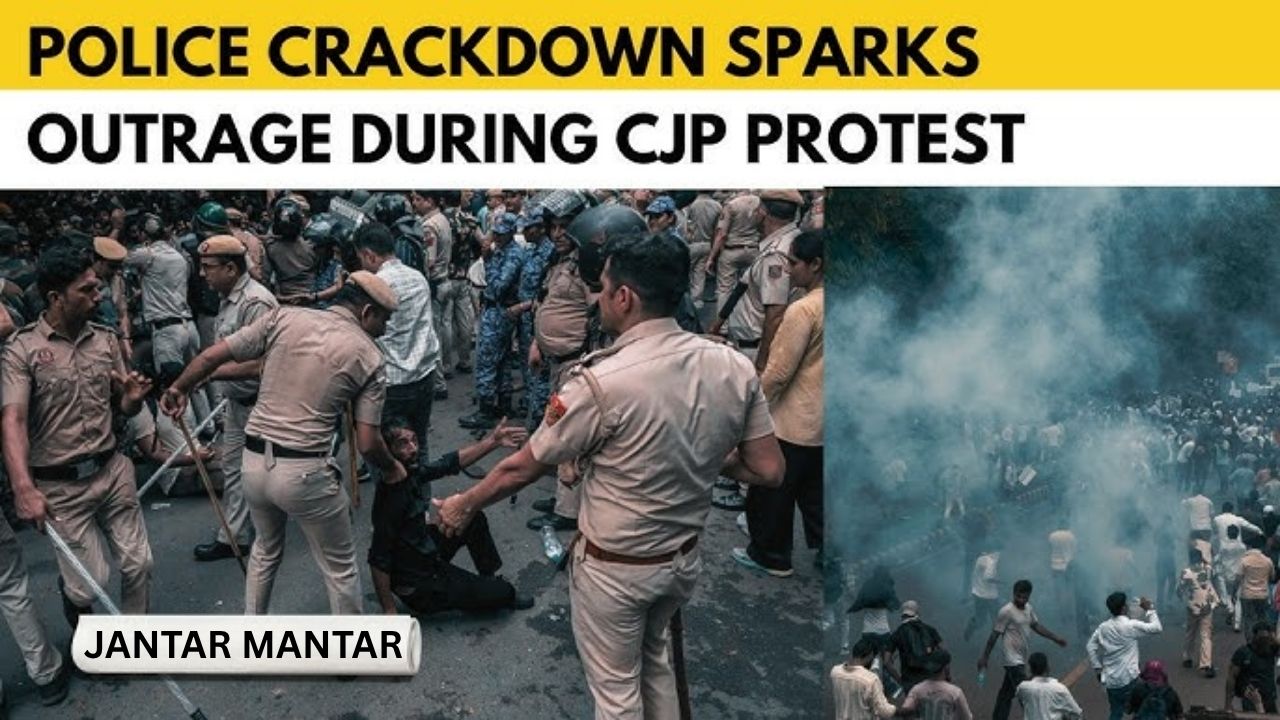
When protesters stepped out from Jantar Mantar under the call of “Sansad Chalo,” they said their destination was democratic accountability — Parliament itself. What followed was a confrontation that transformed a local sit-in into a nationwide controversy over police force, student rights and the right to protest in the capital.
Witnesses described tear gas, baton charges, chaos on central Delhi roads, and a scramble of injured protesters and police personnel. Competing numbers emerged quickly: official tallies of injuries on both sides; protester claims of higher civilian casualties; hospitals filling with the wounded. In the age of smartphones, those disputes played out in real time on social media.
How the march escalated
Organisers framed Sansad Chalo as a peaceful assertion of constitutional rights as Parliament's monsoon session opened. Police argued that large processions near high-security zones required strict control. Between those positions lay a street filled with young people who believed that sitting quietly at Jantar Mantar was no longer enough.
Attempts to push toward Parliament met barricades. Push-and-pull turned into dispersal operations. Videos of force against students triggered condemnation from opposition parties, teachers' groups and human rights voices.
Security state vs protest street
- Heavy deployment of police and paramilitary around central Delhi.
- Arrests and later bail for many detained protesters.
- Dismantling of stages and tents at the protest site, followed by determined reoccupation.
- Temporary closure of multiple Metro stations in a wide radius.
- Reports of mobile service disruption near Jantar Mantar during peak tension hours.
Why the crackdown backfired politically
In protest politics, repression often recruits. Parents who might have told children to “focus on studies” began asking why aspirants were beaten for demanding clean exams. Campuses that had watched from a distance suddenly organised solidarity events. Journalists treated the story as a national crisis rather than a routine Delhi traffic disruption.
The government's later outreach — including talk of stronger paper-leak laws and dialogue — cannot be separated from the images of that day. Public legitimacy, once damaged on camera, is hard to repair with press notes alone.
Legal and democratic questions
India's Constitution protects peaceful assembly, subject to reasonable restrictions. The Sansad Chalo aftermath forces a practical question: when does crowd control become collective punishment? Independent fact-finding, transparent injury data and time-bound review of police conduct are essential if public trust is to be rebuilt.
What changed after Sansad Chalo
The sit-in hardened. Negotiations accelerated. Hunger strike coverage intensified. And “Jantar Mantar Protest” became a search term far beyond Delhi. For historians of Indian street politics, the march will likely mark the turning point when a student agitation became a full-spectrum national movement.