The Fear Killed Her': How an Exam Scandal in India Sparked a Student Uprising
A leaked exam paper. A cancelled result. A wave of grief that grew into a movement—and just cost a government minister his job.
Before you read on: This story discusses student suicide. If anything here affects you personally, you'll find support resources at the end.
The story in brief:
- India's medical entrance exam, NEET, was compromised by a leak scandal uncovered in May 2026
- The government cancelled results for over 2 million candidates and ordered a nationwide retake
- At least three student suicides have been linked by grieving families to the crisis
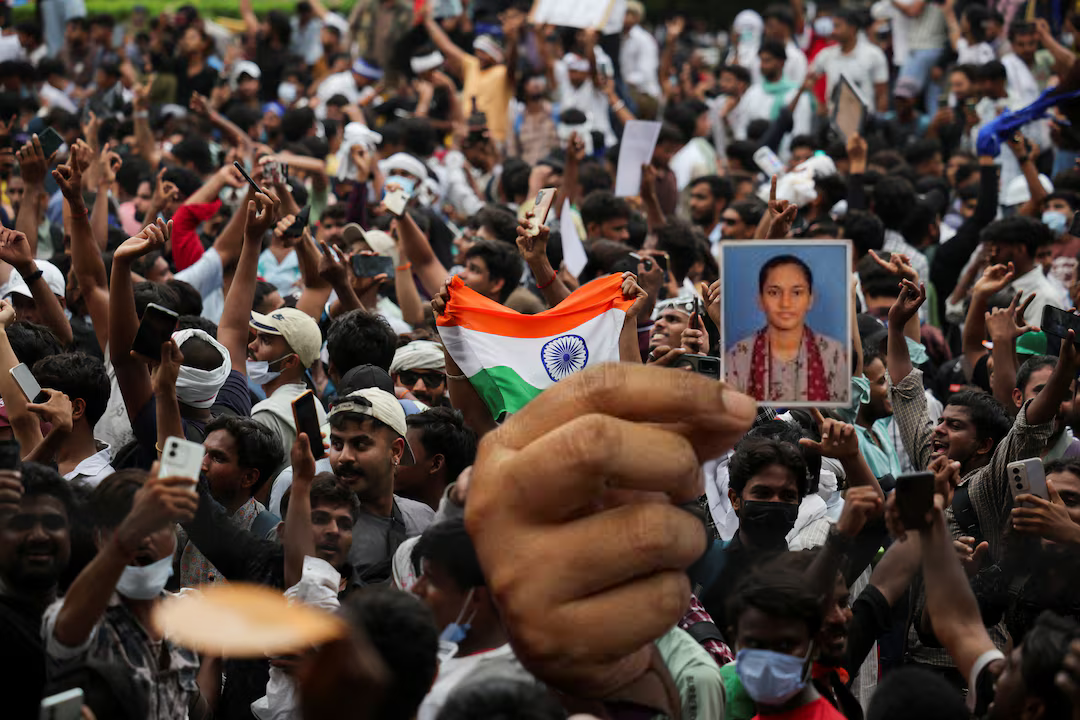
- Youth-led protests grew into one of India's largest demonstrations in years
- Education Minister Dharmendra Pradhan resigned on July 25, 2026, under mounting pressure
The night before she was due to retake one of the hardest exams in the world, 19-year-old Sheikh Sana sat down and wrote two words on a plain sheet of paper: I am sorry.
She wasn't retaking the test because she'd failed it. She was retaking it because someone else had cheated.
Sana had already sat for India's National Eligibility-cum-Entrance Test—NEET, the single exam that decides which of the country's more than two million hopeful teenagers get a shot at medical school. Then came the news that the paper had leaked. Officials scrapped the results and ordered everyone back into the exam hall. For Sana, the thought of doing it all over again was more than she could carry.
"The fear killed her. The fear of re-NEET," her father, Sheikh Jaffar Hussain, later told Reuters at Jantar Mantar, the New Delhi landmark that has become ground zero for a growing student movement.
Sana is one of at least three students whose families believe the NEET crisis played a role in their deaths. Police in the affected states have registered the deaths as suicides, and the cases remain under investigation; officials haven't commented on what caused them, and Reuters hasn't been able to independently confirm the exact link to the exam crisis. But for the families involved, the timing speaks for itself — and their grief has helped turn a testing scandal into one of the biggest youth-led protest movements India has seen in years.
What Actually Went Wrong With NEET
NEET is the only gateway to a medical degree in India. More than two million students sat the exam in May, competing for a small number of seats — government figures suggest only around 6% of candidates get in. For many families, a place at medical school is the difference between a life of financial precarity and one of stability and status, and they'll spend years, and their savings, preparing a child for this one test.
So when India's Central Bureau of Investigation revealed in mid-May that teachers and agents connected to private coaching centers had been selling access to the exam paper, the fallout was immediate. The government cancelled the release of results and ordered a nationwide retake for June — meaning millions of students who thought they were finished had to go straight back into preparation, with no guarantee the same thing wouldn't happen again.
Thirteen people have been arrested in the investigation so far, including a doctor and several teachers. But for students already worn down by months of preparation, a retake didn't feel like justice. It felt like being punished for someone else's crime.
From Grief to a Movement
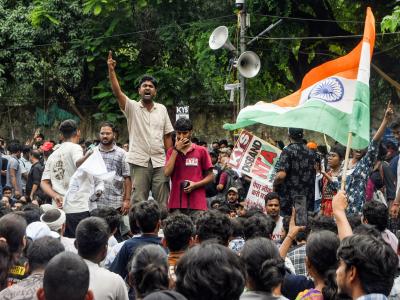
The protests started small and grew fast. Leading them is the Cockroach Janta Party, a Gen Z-driven group that has organized sit-ins at Jantar Mantar and says it has documented 21 student suicides it believes are connected to the NEET fiasco — a number Reuters has not been able to independently verify.
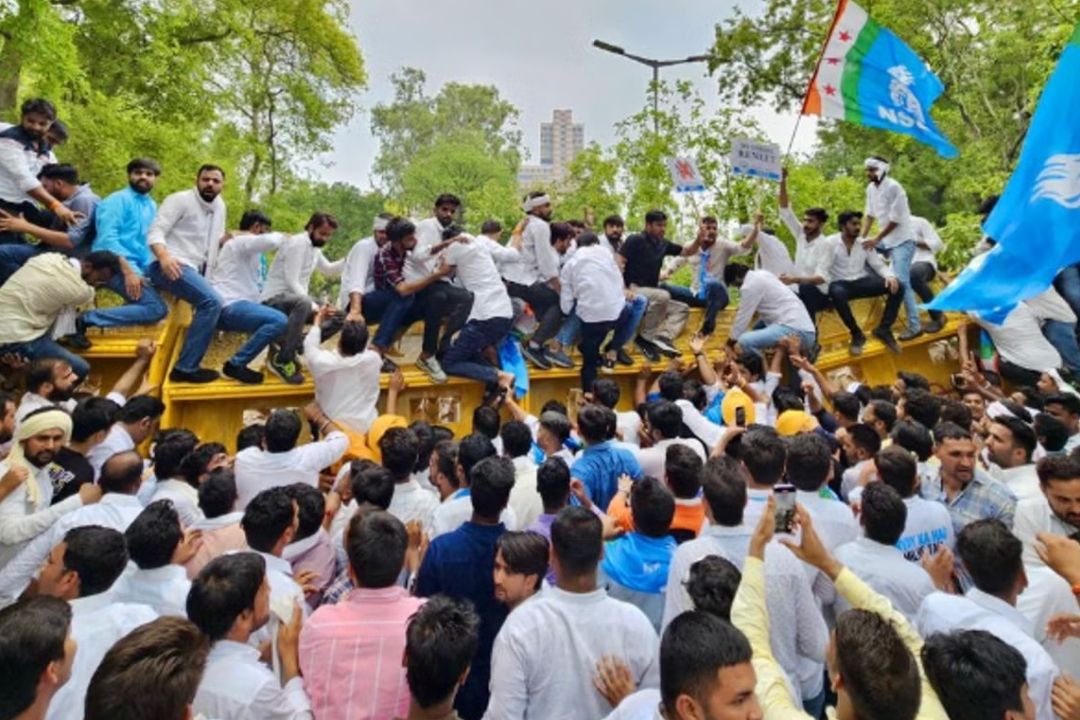
This week, the movement reached a different scale entirely. Tens of thousands of protesters filled central Delhi, and police moved to break up the crowds with batons and tear gas. Inside parliament, opposition lawmakers brought proceedings to a halt, echoing the protesters' central demand: the resignation of Education Minister Dharmendra Pradhan. Congress Party leader Rahul Gandhi went further, telling reporters that India has seen more than 150 exam leaks over the past decade — and that almost none of them led to real consequences.
On Saturday, the pressure produced a result. Pradhan resigned. In a post on X, he wrote that he "deeply respect[ed] the aspirations, feelings, and legitimate expectations of the country's youth."
The Families Behind the Headlines
Behind the protest numbers are individual households trying to make sense of a loss they don't fully understand.
In Rajasthan's Jhunjhunu district, farmer Rajesh Kumar sold land worth 2.8 million rupees (about $29,000) and took out a bank loan of 1.1 million rupees so his son Pradeep could move to Sikar, one of India's best-known coaching hubs, and prepare for NEET. Pradeep had wanted to be a doctor since he was a child. He died by suicide on May 15, days after the exam results were cancelled.
Sitting outside his family's brick home, a calf tethered nearby, Kumar told Reuters he's holding off on his son's last rites — the immersion of his ashes in the Ganges — until the education minister resigns. "We are farmers and hardly educated," he said, "but my son always wanted to become a doctor." It isn't compensation he's after, he added. "I want accountability."
In Gujarat, 17-year-old Kahaan Patel had hoped NEET would eventually take him to the United States for further medical training. When the retake was announced, his father Prashant Patel said, Kahaan tried to start preparing again — but the uncertainty was too much to bear. He died just days before the retest took place in June. "He wasn't able to fight more, so he ended it," his father said.
A Government Under Pressure
Prime Minister Narendra Modi addressed the scandal in a video message this past week, describing the leaks as a genuinely painful issue for millions of students and their families, and promising fast-track trials for those responsible. Neither his office nor Pradhan's ministry responded to Reuters' questions about the student deaths or the wider protests.
It's a familiar position for Modi. Over 12 years in office, he has weathered several large protest movements — over a citizenship law, over agricultural reforms — without lasting damage to his popularity. Whether this one is different remains to be seen. But few of his past challenges have carried the same specific, human weight: grieving parents standing at a protest site, asking why their children aren't alive to sit an exam that was supposed to change their lives.
Why an Exam Can Feel Like Life or Death
It's tempting to read this as a story about one bad exam. It's really a story about what happens when enormous pressure meets very few ways out.
India is a young country — 65% of its population is under 35 — and youth unemployment sits at 9.9%, more than triple the national rate of 3.1%. A handful of professional degrees, NEET chief among them, are seen as one of the only reliable paths to security. That scarcity is exactly what makes a scandal like this one so combustible.
"When young people are on the streets of Delhi protesting against a malfunctioning education system, it acquires much larger significance," said Sabyasachi Basu Ray Chaudhury, a political science professor at Kolkata's Rabindra Bharati University.
Nandita Narain, a former president of the Delhi University Teachers' Association, points to a system that has let private coaching centers — many charging steep fees for a shot at competitive exams — become almost as important as schools themselves. "The youth of India have finally awakened to the seriousness of the problem," she said.
What Happens Now
Pradhan's resignation is being treated by many protesters as a first win, not a finish line. The Cockroach Janta Party and the Congress Party are both pushing for compensation for the families of students who died—something the government hasn't offered. Most of the families Reuters spoke to said money was never the point.
At Jantar Mantar, two photographs of students who died sit propped on the protest stage, next to crowds still chanting for answers. For the parents who placed them there, nothing short of real accountability will feel like enough.