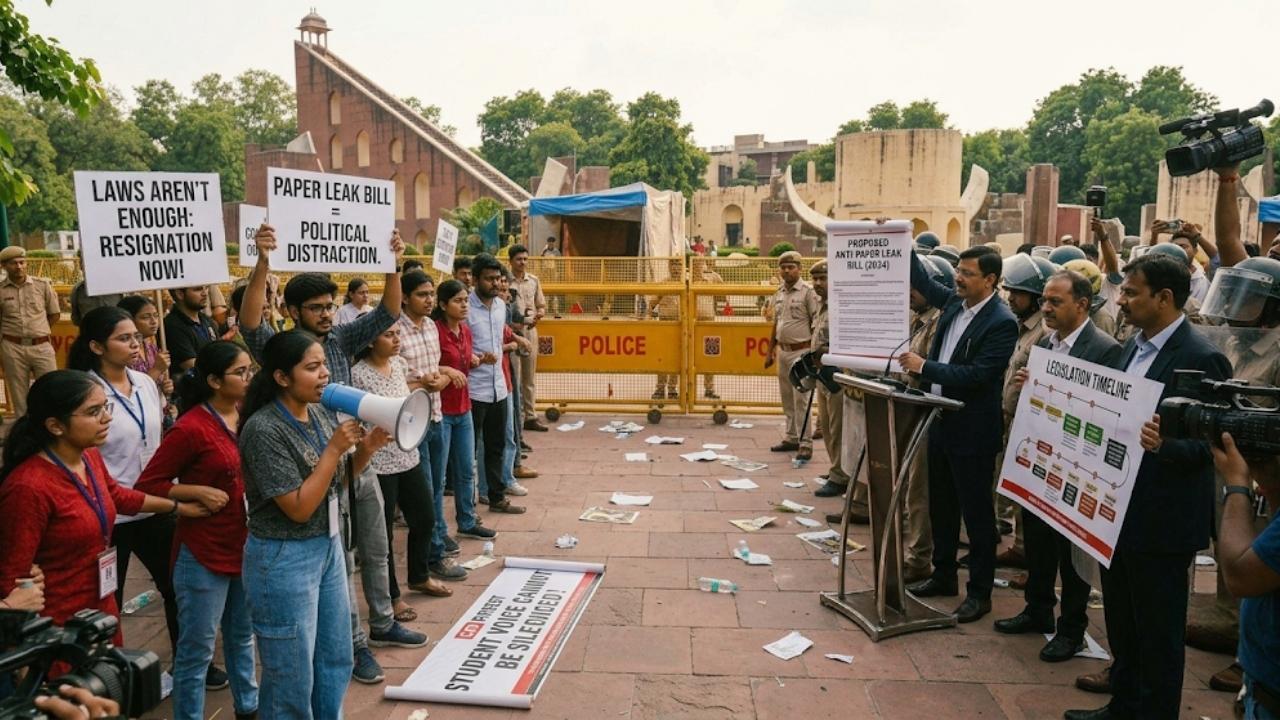
As the sit-in at Jantar Mantar continued, Prime Minister Narendra Modi signalled that stricter action against paper leaks would be decided at the Cabinet and that a bill would be brought to Parliament. For many citizens, tougher law sounds like progress. For protesters on the ground, it sounds incomplete.
The clash is simple to state and hard to resolve: Can legislation substitute for political resignation?
What a paper-leak bill can realistically do
- Define clearer offences around leaking, selling or facilitating exam papers.
- Create faster investigation and trial pathways.
- Raise penalties to deter organised fraud networks.
- Give agencies sharper tools against cross-state rackets.
These are necessary reforms. India has seen repeated leak scandals across states and exams; weak deterrence invites repetition. A serious national law could help — if drafted tightly, funded properly and enforced without political protection for the connected.
Why protesters still demand resignation
Laws govern the future. Resignation assigns blame for the past. Students argue that without a political cost at the Education Ministry, every scandal ends in the same cycle: outrage, committee, announcement, amnesia. Removing a minister is a symbolic reset that tells aspirants someone powerful paid a price.
CJP leaders have said, in substance, that the strictest action against examination irregularities would be removing the minister — not only promising a future statute. That position keeps the street firm even when the government offers legal packages.
Two tracks that must move together
- Legal track: bill, rules, investigative capacity, victim redress.
- Political track: accountability, inquiry timelines, public trust rebuilding.
If only the first moves, negotiations stall. If only the second moves without institutional redesign, the next leak returns. A settlement durable enough to empty Jantar Mantar needs both.
Risks on each side
For the government: overselling a bill while ignoring resignation politics may look like deflection. For protesters: rejecting every legal reform as “eyewash” could alienate middle-ground parents who want practical solutions. Skilled negotiation will separate non-negotiables from bargainable timelines.
What citizens should demand from any bill
Independent investigation triggers, protection for whistleblowers, public disclosure norms for exam bodies, support for affected candidates, and no loopholes for influential accused. A bill that punishes only the small courier while protecting the network is not reform — it is theatre.
Until those standards are met — and political responsibility is owned — the tents at Jantar Mantar are unlikely to come down.