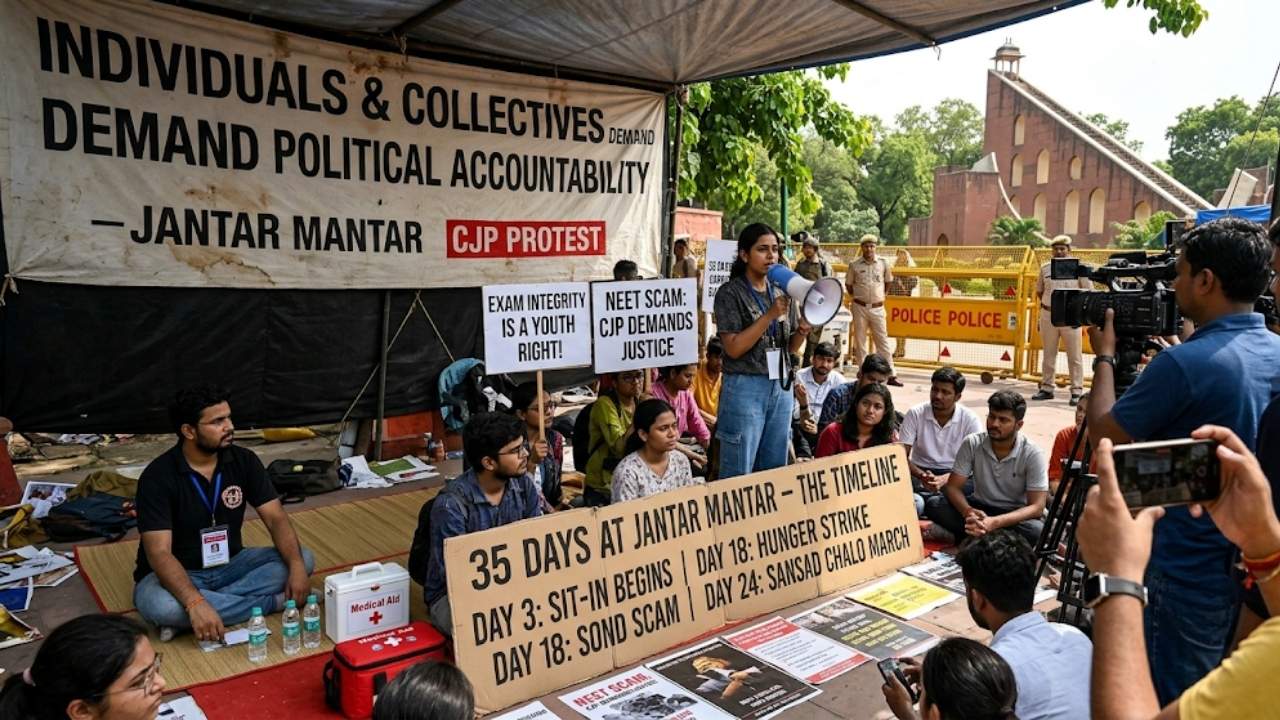
Below is a detailed working timeline of the indefinite protest at Delhi's Jantar Mantar, centred on examination integrity, NEET-related anger and the demand for political accountability. Dates may be refined as official records and independent reports consolidate; the sequence of pressure points is already clear.
Week 1–2: Sit-in begins, demands crystallise
Students and organisers establish a continuous presence at Jantar Mantar. Early speeches focus on paper leaks, failed oversight and the need for an independent probe. Placards naming the Education Minister appear. Media treats it first as a student story, then as a political challenge.
- Volunteer systems for food, water and medical aid take shape.
- State-level solidarity messages start arriving.
- Government responses remain largely procedural.
Week 3: Hunger strike raises the stakes
Activist Sonam Wangchuk's hunger strike draws national attention. Coverage expands beyond education pages to primetime politics. Supporters argue that moral urgency has outpaced bureaucratic timelines. Critics warn of health risks and political polarisation.
Sansad Chalo day: confrontation near Parliament
A march toward Parliament triggers a major police operation. Tear gas, batons, injuries and arrests dominate headlines. Competing casualty figures circulate. Opposition parties condemn force; police cite security imperatives. The protest's emotional centre of gravity shifts from grievance to repression.
Security surge and access squeeze
Authorities intensify deployment. Stages and tents face dismantling pressure. Multiple Metro stations in a wide radius shut. Reports of mobile disruption near the site add to protester claims of deliberate isolation. Despite this, reoccupation and night vigils continue.
Approaching Day 35: talks and a hunger strike ends
Back-channel conversations mature into a public commitment to meet at a neutral venue — the Constitution Club of India. Wangchuk ends the 26-day fast after assurances linked to peaceful protesters' cases. CJP thanks him but insists the sit-in continues until the minister resigns.
Key themes across 35 days
- Exam integrity as a youth-rights issue.
- Resignation vs legislation as competing settlement tracks.
- Policing of protest as a second controversy layered on the first.
- Media and social platforms as force multipliers.
Why timelines help readers and Google users
Fast-moving protests produce confusion. A clear chronology helps citizens, journalists and search engines understand cause and effect: leak anger → sit-in → hunger strike → march → crackdown → talks. We will keep updating this timeline as verified milestones arrive.
Bookmark this page for the evolving history of the Jantar Mantar CJP protest.